Dizziness is not uncommon; sometimes we feel dizzy when we stand up too fast, are dehydrated or have low blood sugar. Even though dizziness is common, it’s something we need to watch out for, especially as we age, because feeling lightheaded can be a precursor to a fall.
Fall risk—and the risk of fall-related problems—increases as we age. According to the CDC, more than one out of every four older adults falls each year, and there are about 3 million emergency department visits each year related to falls. Falls can lead to broken bones, particularly hip fractures, head injuries and more, making them a serious health concern.
Staying Active to Reduce Fall Risk
In general, taking care of your overall health can reduce your fall risk, as it keeps your muscles strong, your bones hardy, your joints flexible and your heart steady. All of these elements can help your body reorient itself during a dizzy spell and keep you upright.
Consider setting up a regular exercise regimen that’s right for you. Here are some activities we recommend that can be especially beneficial in reducing fall risk.
Strength training
One of the primary risk factors for falling is diminished muscle strength, particularly in the lower body. If your legs and core are weakened, you’ll have a harder time staying steady and regaining balance during a dizzy spell.
The strength-training exercises you implement will depend on your current level of activity. If you’re already living an active lifestyle, then you could consider starting weight training or increasing the weight in your existing weight training, focusing especially on the lower body.
If you aren’t particularly active yet, don’t put yourself at risk by doing too much too fast. Start with small exercises in your home, such as sit-to-stand, heel raises, climbing stairs and marching in place to activate the muscles and get them used to the activity.
Balance Training
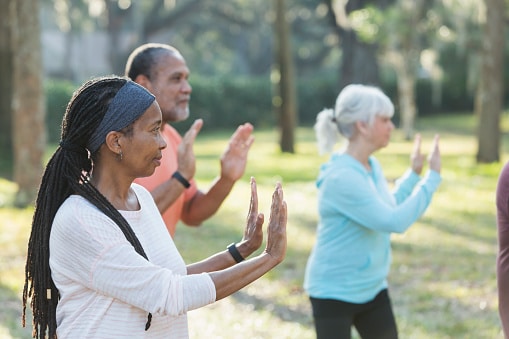
Yoga, Pilates and tai chi can all improve balance. In fact, studies show that tai chi is quite effective in improving balance and decreasing fall risk. All three of these forms of exercise are characterized by slow, focused movement, emphasizing balance and control, which are essential for preventing falls. Seek out a community tai chi or yoga class at a local gym or senior center.
Get Outside
Whether you’re currently active or just getting started, there’s nothing more motivating than getting outside. Going for a walk or a short hike every day can be incredibly therapeutic, as well as strengthening for your legs and endurance levels.
Just make sure you’re wearing supportive footwear that’s appropriate for walking, and use caution when walking on wet, uneven or slippery ground. If you need a support when walking, such as a cane or walker, bring that along, and use hiking poles when on trails. We strongly recommend bringing someone along with you on your walk, which provides an excellent chance to socialize, too!
Talk to Your Healthcare Team
Our bodies are complex, and many factors go into fall risk. In addition to staying active, stay on top of vision tests, hearing tests and annual checkups with your primary healthcare provider, as vision, hearing and general health can all affect fall risk.
If you start to notice that you’re more unsteady on your feet, have fallen before, are concerned about your fall risk or have started experiencing vertigo, don’t wait to discuss this with your doctor. They may refer you to a balance specialist for an evaluation and vestibular therapy or other treatment. Don’t wait until a fall happens; be active in your fall prevention now.
Contact Audiology Associates of Redding to learn more.