As parents, we’re constantly thinking about our children’s health and well-being. If you’re a parent of a child with hearing loss, you’re probably concerned about what caused it, how they will socialize and generally how to give them a fulfilling childhood. As audiologists, we at Audiology Associates of Redding are resources for both our patients and their caregivers, so let’s discuss hearing loss in children.
Common Causes of Hearing Loss in Children
There are three main causes of hearing loss in adolescents. Let’s break them down.
Congenital
Congenital means the condition was present at birth. There’s a strong genetic element to hearing loss, so if you or your partner has hearing loss that wasn’t acquired (e.g., noise-related or from another health condition), there’s a solid chance your children will also have hearing loss.
Congenital hearing loss may also be present for non-genetic causes, such as prenatal issues, a virus contracted during pregnancy, certain health conditions and syndromes and premature birth.
Illness and Injury
At some point or another, all children get sick, and all children get injured. Sometimes, illnesses and injuries can have lasting effects, including hearing loss. Head or neck trauma can impact how the ear and the brain communicate; a severe ear infection can cause permanent damage to the structures of the middle and inner ear; and several viruses are known to impact hearing.
Exposure to Loud Noise
Noise-induced hearing loss, or NIHL, is a form of acquired hearing loss that is on the rise in our modern, noisy world. Children can be especially susceptible to NIHL because their ears are still developing and much more fragile than those of adults.
Signs Your Child Might Have Hearing Loss
Children are extremely adaptable, so they may not show signs of hearing loss the same way adults do or realize that things don’t sound the way they ought to. Some signs that might raise a red flag include:
- Your child complaining that their ear feels “funny” or “full” or “plugged”
- Constantly touching or tugging on their ears
- Doesn’t seem to startle at sudden loud noises
- Slowed development in speech and language
- Frequently asking for repeats
- An aversion to socializing (note: use this sign in tandem with others, as it could also indicate something else, like autism, or your child may simply be shy)
Treating Hearing Loss in Children with Hearing Aids
Hearing aids are the most common way to treat hearing loss, and that goes for pediatric hearing loss, as well! These devices do more than just amplify sound into your child’s ear—modern devices filter tones and pitches, amplifying the sounds your child struggles to hear most (as determined by their audiogram) while suppressing background noise.
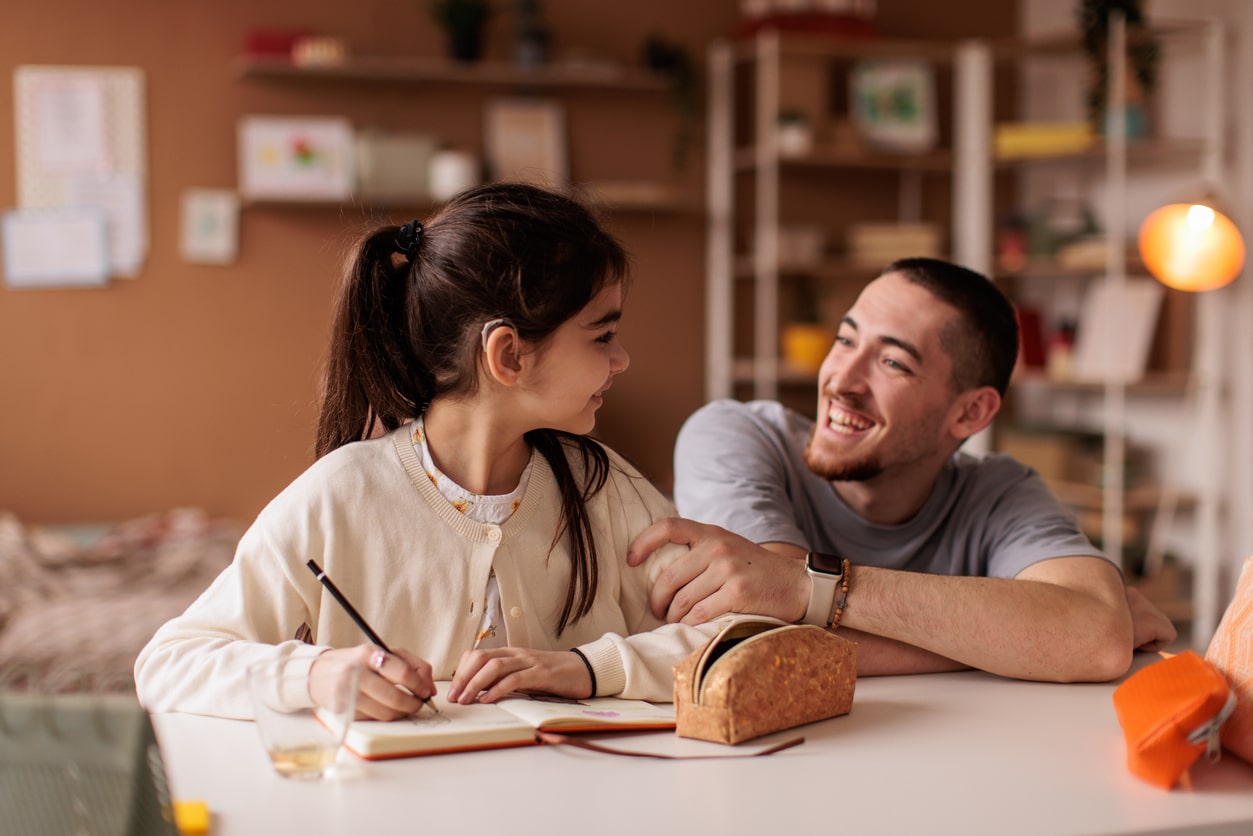
Many kids worry about being different from their peers, but modern hearing aids are discreet, with some being almost entirely invisible. Your child can get the hearing help they need without the bulky, conspicuous hearing devices of the past.
And finally, you as the parent might be concerned about giving your child delicate electronics, but hearing aids are more durable than ever. They can withstand even the most rambunctious kid, which is good! You don’t want your child to feel hampered or slowed down because they need to be cautious with their devices.
Talking to Your Child About Their Hearing Loss
All the information above isn’t just for you, their parent. It’s for your child, too. If your child has been diagnosed with hearing loss, we strongly recommend you take the time to explain their condition to them. Teach them about:
- What caused their hearing loss
- How their hearing loss affects their daily life (e.g., “you might have trouble hearing the teacher talk when you’re far away” or “your friends may need to tap you on the shoulder to get your attention, not just call your name”)
- How to protect their residual hearing—don’t listen to music too loudly, avoid exposure to loud noise, etc.
- What their hearing aids are, how to take care of them, how they work and how they help your child hear better
- How to ask for help if they’re having trouble with hearing or their hearing aids
Just like you, we want your child to have a full, happy childhood. Your child should feel empowered with their hearing aids, not confused or othered. Hearing aids won’t hold them back from making friends, learning new things, playing sports or enjoying any of the amazing experiences of childhood.
And as we said above, we’re here to be resources for you and your child throughout their journey with hearing loss. Call us today to learn more, and if you suspect your child has hearing loss and needs a hearing exam, contact us to schedule an appointment.