The groundwork for lifelong health and well-being is built in early childhood. Children get yearly visits with their pediatrician and basic hearing and vision screenings at school to support this development, and the impacts are massive, probably more impactful than many parents realize.
Hearing and Child Development
Hearing plays a critical role in language development, communication, social interaction, relationship building and learning capabilities. Healthy hearing benefits all of those things, and any hearing difficulties can make the effort much harder. Undiagnosed or untreated hearing loss in children can lead to delayed speech, struggles with language, academic difficulties, social withdrawal and emotional troubles.
Early Detection Means Early Intervention
To stay ahead of potential difficulties, early hearing screenings are crucial. Signs of hearing loss in kids can be subtle (we wrote a bit about that in last week’s blog post here!), so early screenings are a quick and easy “checkpoint” to measure your child’s hearing health and catch potential issues that may have otherwise gone unnoticed. That way, you know what might need follow-up attention. It’s well-known that the sooner a delay or issue is identified, the better the outcome.
Lifelong Hearing Health
In most cases, hearing loss is a progressive condition, and it’s not reversible. Hearing abilities will gradually erode over the course of one’s life. If hearing loss begins in childhood, it’s going to be a lifelong condition for your child. That said, you can slow the progression of hearing loss with effective, timely treatment, such as speech therapy or hearing aids.
As a parent, you want to set your child up for lifelong success. Hearing difficulties do not make it impossible to do that! Hearing loss treatment enables and empowers your child to reach their full potential socially and academically.
What Pediatric Hearing Testing Entails
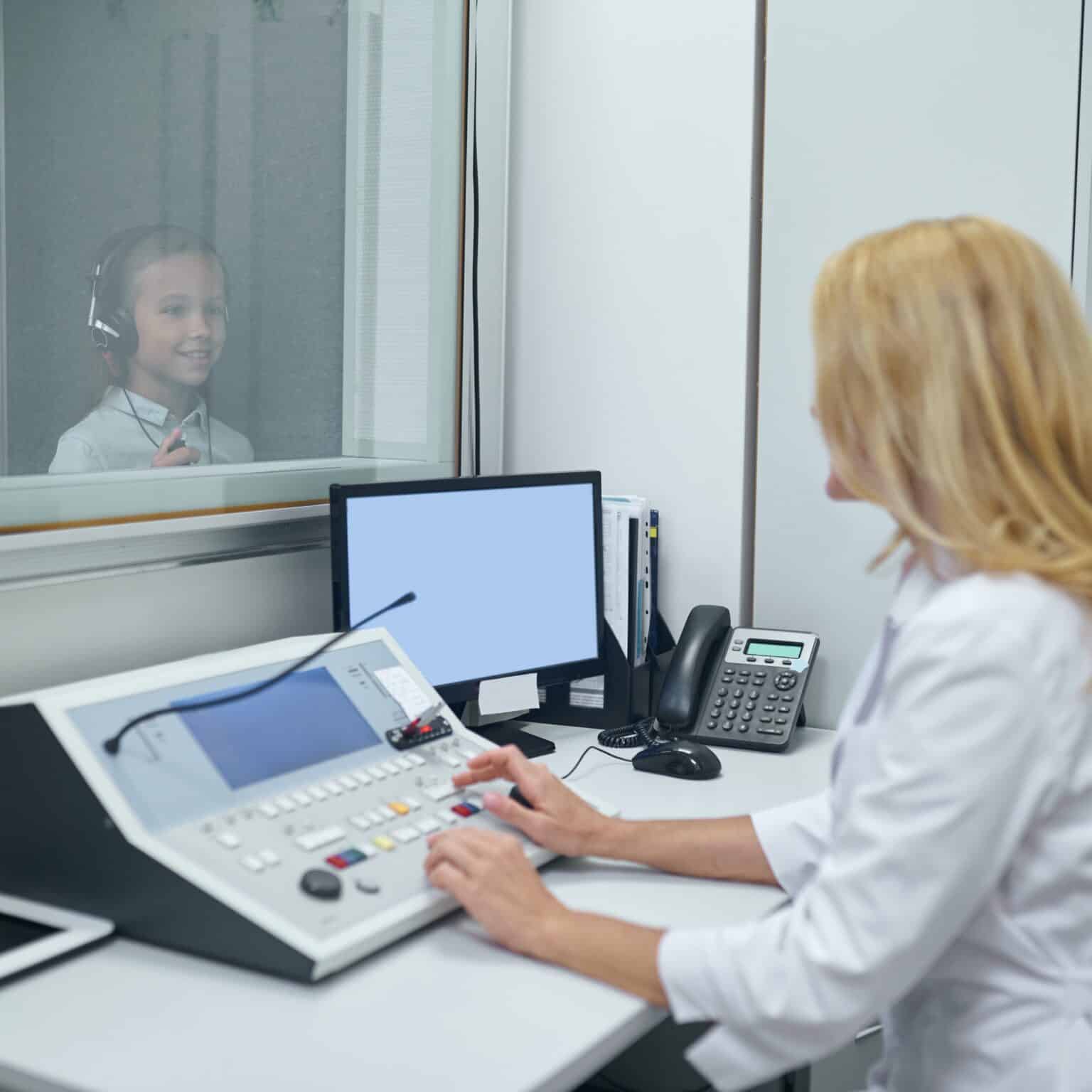
The first line of defense in pediatric hearing testing is hearing screenings. These are non-diagnostic, quick checks. They will determine whether you need to investigate further, but they will not identify the problem or its severity.
If the hearing screening results show an alert or flag, that’s when a hearing test comes in. These comprehensive exams will result in a full audiogram—a chart that illustrates the range of a person’s hearing abilities—and can determine if hearing loss is present, its severity and potentially what caused it. This is the type of information audiologists use to build a custom treatment plan.
If your child has recently had a hearing screening and you’re looking for a follow-up hearing test with a hearing professional, give us a call at Audiology Associates of Redding. We have a robust pediatric hearing department with knowledgeable staff who are passionate about setting your child up for healthy hearing for their whole life. Call today to learn more and make an appointment.