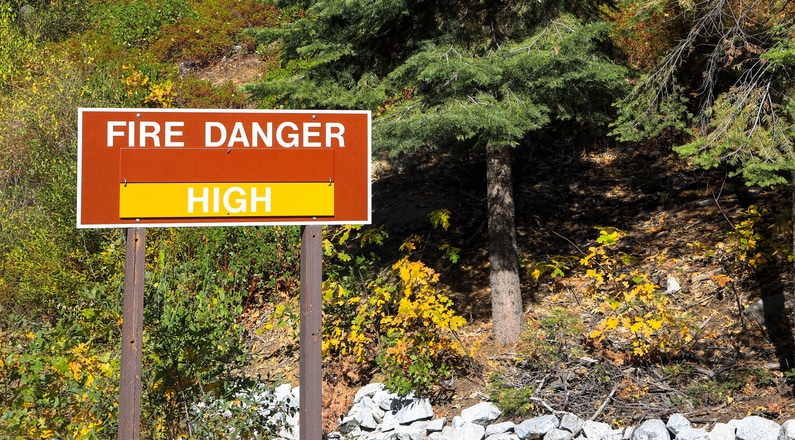
It’s an unfortunate truth that has developed over the past decade that August means wildfire season in Northern California. There are many health risks associated with the poor air quality we experience during a wildfire, and you may be surprised to find out that there’s a correlation between poor air quality and hearing loss, as well.
How Hearing Works
Let’s briefly review the mechanisms of our auditory (hearing) system before diving into the smoke issue. This will help us understand how air quality affects hearing. Sound waves enter our ears, travel down the ear canal and strike the eardrum, a membrane that separates the outer ear from the middle ear. This membrane vibrates—much like a drum, earning the eardrum its name—and the vibrations are conducted through the middle ear into an organ called the cochlea.
The cochlea is the powerhouse of the auditory system. It is lined with thousands of tiny sensory cells that read these vibrations from the eardrum and transcribe them into electrical signals, which they then send to the brain. Each individual sensory cell reads for specific pitches, and they are all quite delicate.
Our Ears Need Oxygen
One of the primary ways fire season can impact hearing is by decreasing the quality of the oxygen we breathe. When we breathe in air with a lot of smoke or other air pollutants, it diminishes the amount of oxygen we get, and as a result, we get less oxygen than our ears need. Like all our organs, our auditory system is dependent on a strong flow of oxygen-rich blood to function. The cochlear sensory cells rely on it. Without sufficient oxygen, they can become malnourished or even waste away. Once they are damaged, they do not regenerate, at which point they can no longer communicate sound information to the brain.
Studies back this up. A study published in 2022 found that exposure to air pollution with ambient small particles was significantly associated with an increased risk of hearing loss. Fire pumps a ton of small particles into the air in the form of soot, dust and debris from the matter it burns.1
Ear Infections
Another major risk factor to hearing ability is ear infections. Infections can occur in the outer ear, middle ear or inner ear, and they are characterized by inflammation, fluid buildup and an overpopulation of bacteria. All of these characteristics can lead to hearing loss, both temporary and permanent. Inflammation and fluid buildup can block the ear canal, effectively stopping sound waves from reaching the eardrum or cochlea. Bacteria can cause lasting damage to the tissues and structures in the ear, affecting how sound travels through the ear forever.
Ear infections become more common during fire season due to all the debris in the air, which can get trapped in the ears, and due to a weakening of your immune system due to the decreased oxygen, meaning your body is less able to fight off an infection should one take hold.
How to Protect Your Hearing
Improve air quality whenever possible. This will keep oxygen flowing to your ears (and throughout the rest of your body). Do this by:
- Installing high-quality air filters in your home
- Wearing a mask when outside to avoid breathing in fine particles
- Staying indoors when possible
- Checking the air quality before venturing outdoors
- Avoiding strenuous outdoor activity so you’re not breathing heavily in the smoky air
If you do notice any changes in your hearing, it’s important to take it seriously. Damage to the sensory cells in the cochlea is permanent. Seek a professional’s help right away; contact Audiology Associates of Redding to schedule a hearing consultation.
Sources:
1 Ju, M. J., Park, S. K., Kim, S. Y., & Choi, Y. H. (2022). Long-term exposure to ambient air pollutants and hearing loss in Korean adults. The Science of the total environment, 820, 153124. https://doi.org/10.1016/j.scitotenv.2022.153124 Learn More: